


Your Ahrefs subscription tracks backlinks. Your Google Search Console shows clicks. Neither tells you whether ChatGPT mentioned your brand last Tuesday or whether Perplexity is recommending your competitor for your most valuable buying queries. That’s the tracking gap most teams haven’t closed yet, and it’s costing them visibility in the answers that drive 2026 buying decisions.
The data backs the urgency. Only 30% of brands stay visible from one AI answer to the next, and Google’s organic CTR drops 61% on queries with an AI Overview present. Manual prompt testing in spreadsheets won’t scale that volatility.
Here’s what we’ll discuss:
- The features that actually matter when picking an AI SEO tracking tool
- A side-by-side comparison of the top platforms (with real pricing)
- How to match the right tool to your team size, budget, and use case
- The hidden tracking gaps even premium tools leave open
- Our top pick and why we use it daily for client campaigns
If your AI SEO measurement still relies on screenshots and spreadsheets, you’re working twice as hard for half the insight. At Doc Digital SEM, we’ve tested every major platform and built our AI SEO measurement workflow around the tools that actually deliver. The right stack changes everything.
Features That Actually Matter
Not every “AI SEO tool” earns the label. Some are repackaged keyword research platforms with an AI logo slapped on the marketing page. Others are dedicated AI visibility tracking tools that genuinely measure how your brand appears in AI generated answers. Knowing what to look for separates the must-haves from the marketing fluff.
Multi-Platform Coverage
The single biggest dealbreaker. Your AI search visibility tracking tool needs to monitor:
- ChatGPT (with and without Search enabled)
- Google AI Overviews and AI Mode
- Perplexity
- Gemini
- Claude
- Microsoft Copilot
Tools that cover only one or two platforms force you to subscribe to multiple solutions. The best AI SEO tools handle the major AI search platforms in a single dashboard.
Prompt Tracking and Discovery
Keyword research isn’t enough anymore. AI search runs on natural language prompts, not exact-match keywords. Look for tools that offer:
- Pre-built prompt libraries for your industry
- Custom prompt creation tied to target keywords
- Prompt volume estimates (how often specific questions get asked)
- Long-tail prompt discovery based on search intent
Citation and Mention Tracking
The metric that matters most. Your tool should track both citation rate (when AI cites your domain as a source) and mention rate (when your brand appears in AI responses with or without a link). Bonus points for tools that flag the citation-to-mention gap, which reveals when AI uses your content but recommends competitors.
Source Attribution
Knowing your brand isn’t cited helps. Knowing which sources AI engines cite instead is what makes the data actionable. Look for tools that surface:
- The exact URLs AI platforms pull from
- Which competitors dominate citations in your category
- Source diversity (Reddit, Wikipedia, news sites, YouTube)
Competitor Benchmarking
Share of voice metrics only matter in context. Your tool should let you compare your brand visibility side-by-side against direct competitors across the same prompts and platforms.
Real-Time Monitoring and Alerts
AI generated search results shift constantly. Tools that send alerts when your citation rate drops, sentiment shifts negatively, or competitors gain ground let you react before visibility damage compounds.
Integration With Your Existing Stack
The best AI SEO tools play nicely with what you already use:
- Google Search Console and Google Analytics for traffic correlation
- Looker Studio for custom dashboards
- Slack for alert notifications
- API access for custom workflows
- Google Docs and CMS integrations for content optimization
Actionable Insights, Not Just Raw Data
A tool that shows you the problem is half-useful. A tool that prioritizes a to-do list of fixes is the one worth paying for. The best platforms translate AI visibility data into specific recommendations: which pages to refresh, which sources to engage, and which content gaps to fill.
The Top AI SEO Tools Compared
After testing nearly every major platform on the market, here are the tools worth knowing in 2026. Each one solves a specific piece of the AI SEO measurement puzzle, and the right pick depends on your team size, budget, and use case.
AI Clicks
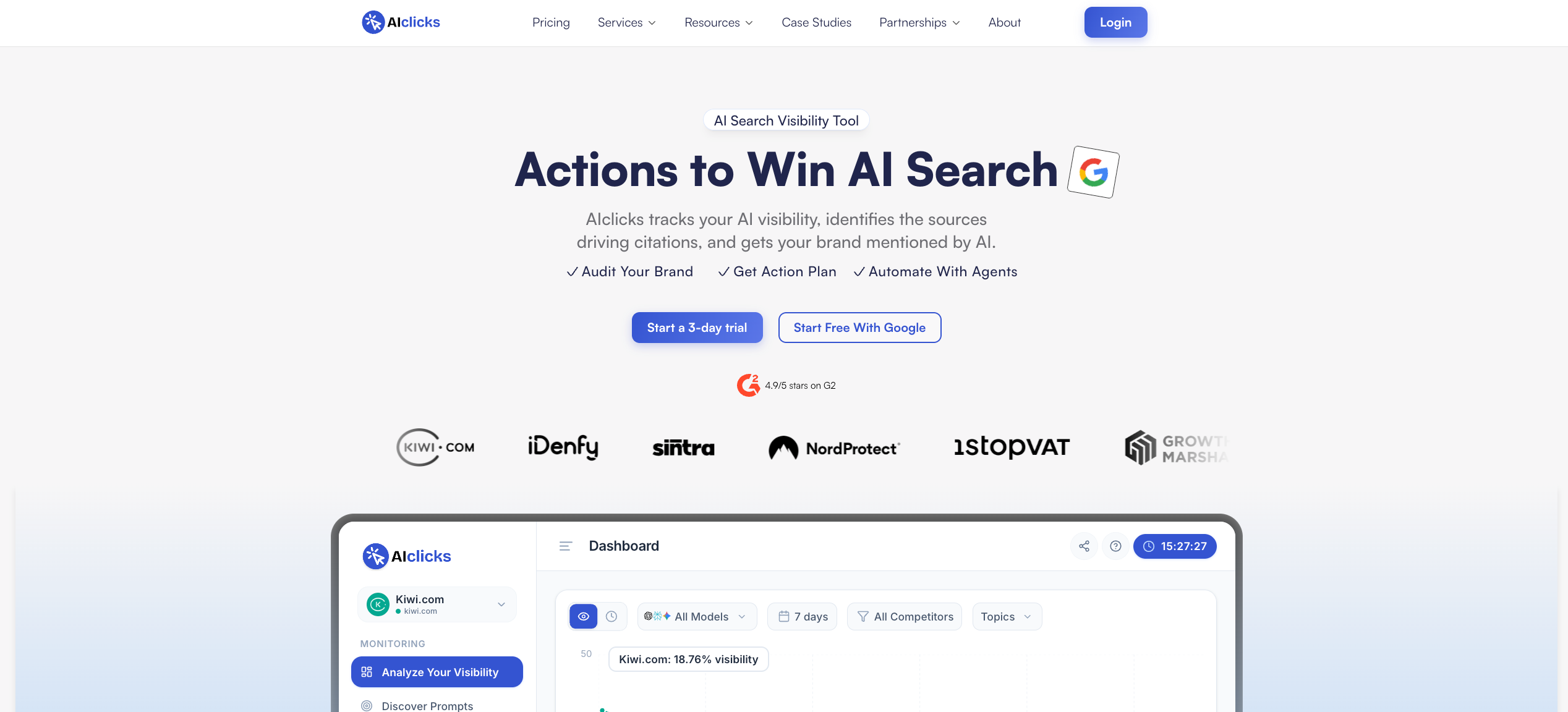
Best for: Agencies and in-house teams that need a complete AI SEO platform covering tracking, optimization, and reporting in a single dashboard.
AI Clicks is our daily-use platform for client campaigns. It’s the only tool we’ve found that consolidates AI search visibility tracking, prompt monitoring, citation analysis, and competitor benchmarking without forcing us to juggle subscriptions across three or four other AI seo tools.
Key features:
- Brand mention and citation tracking across ChatGPT, Gemini, Claude, Perplexity, and Google AI Overviews
- Prompt discovery and tracking with custom prompt libraries
- Competitor share of voice analysis side-by-side
- Source attribution showing which URLs AI platforms cite
- Sentiment analysis on brand mentions across AI responses
- Built-in reporting that connects AI visibility data to business outcomes
Pricing: Visit aiclicks.io for current plans.
Considerations: Built specifically for AI visibility, so traditional SEO tasks like backlink analysis still need a complementary tool like Ahrefs or Semrush.
Profound
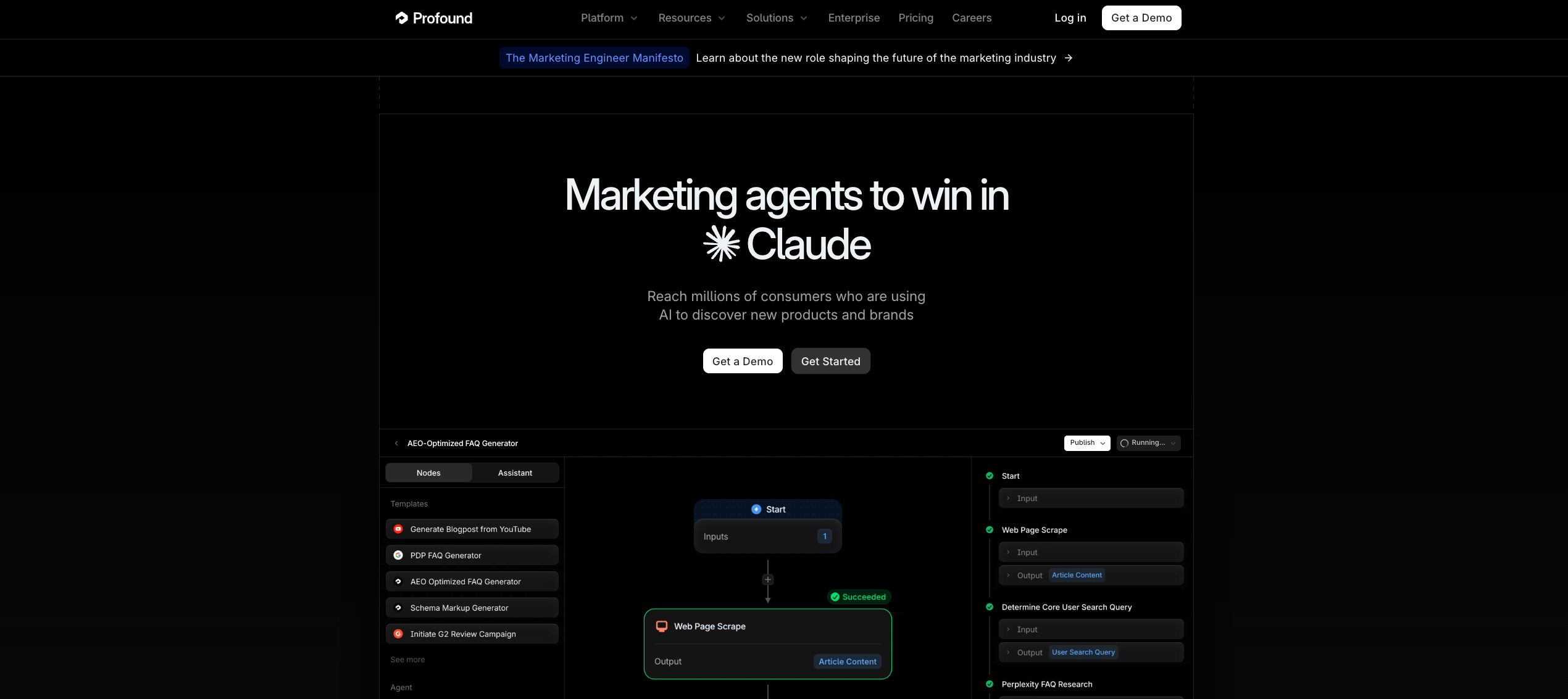
Best for: Enterprise marketing teams tracking brand presence across 10+ AI engines simultaneously.
Profound is the heavy-duty option for Fortune 500 marketing teams. It analyzes millions of real user prompts to discover trending topics, runs prompt volume analysis, and integrates with major martech stacks. The platform is purpose-built for scale.
Key features:
- Tracks 10+ AI engines, including ChatGPT, Gemini, Perplexity, Claude, and Copilot
- Conversation Explorer analyzes millions of real user prompts
- Automated prompt discovery at scale
- Enterprise integrations with existing marketing platforms
Pricing: Custom enterprise pricing.
Considerations: Pricing puts it out of reach for smaller teams. Best when you need to track AI visibility across multiple brands or international markets.
AirOps
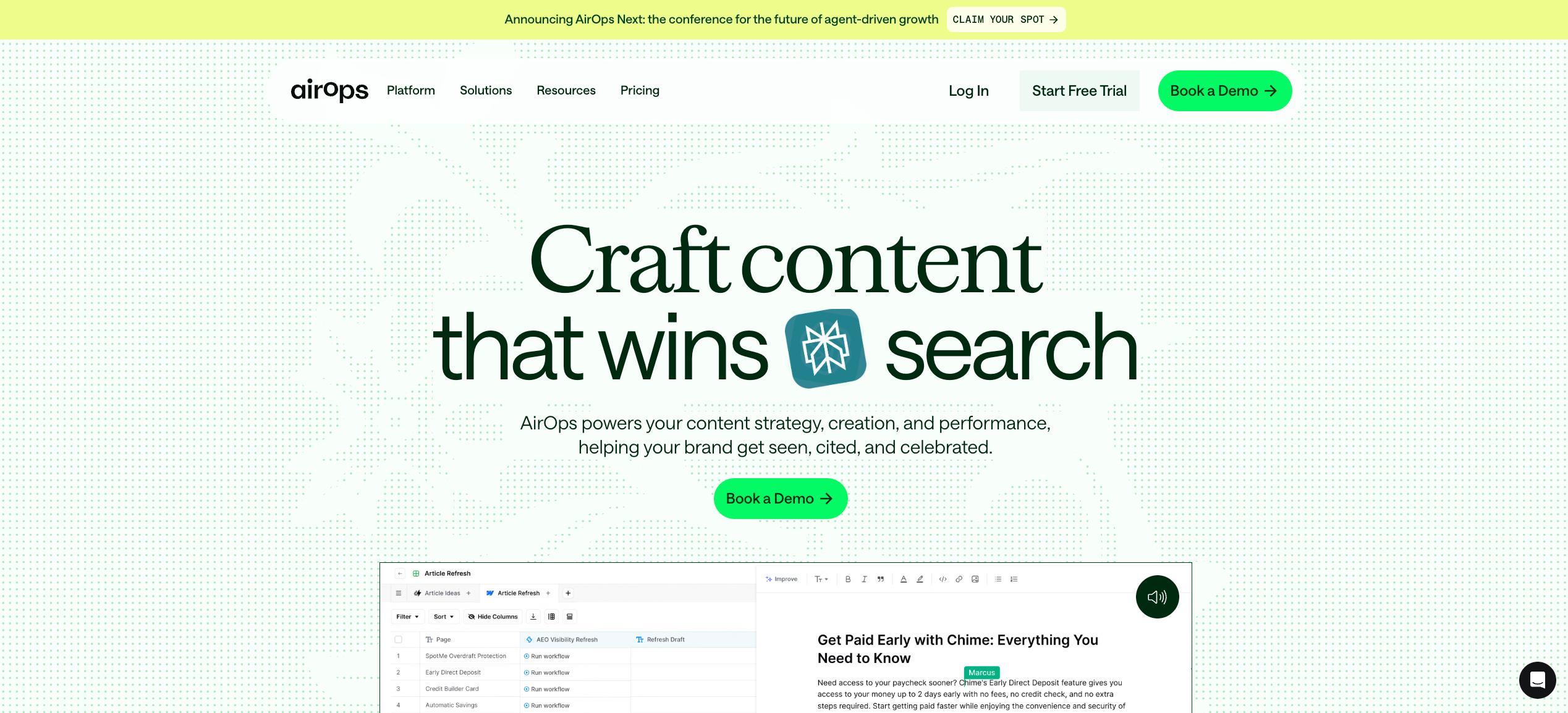
Best for: Content and SEO teams that want AI visibility tracking paired with content optimization workflows.
AirOps takes a hybrid approach, combining AI search monitoring with content generation tools that integrate with Webflow, Shopify, WordPress, and Google Docs. The Brand Visibility Score is a clean metric for measuring AI presence over time.
Key features:
- Citation tracking and share of voice across major AI platforms
- Content gap analysis based on AI visibility data
- Brand Visibility Score as a north star metric
- Integrations with leading CMS platforms
- Access to GPT, Claude, Gemini, and other AI models
Pricing: Custom pricing based on team size.
Considerations: Stronger on content workflows than pure visibility tracking. Best for teams that want both in one platform.
Otterly.ai
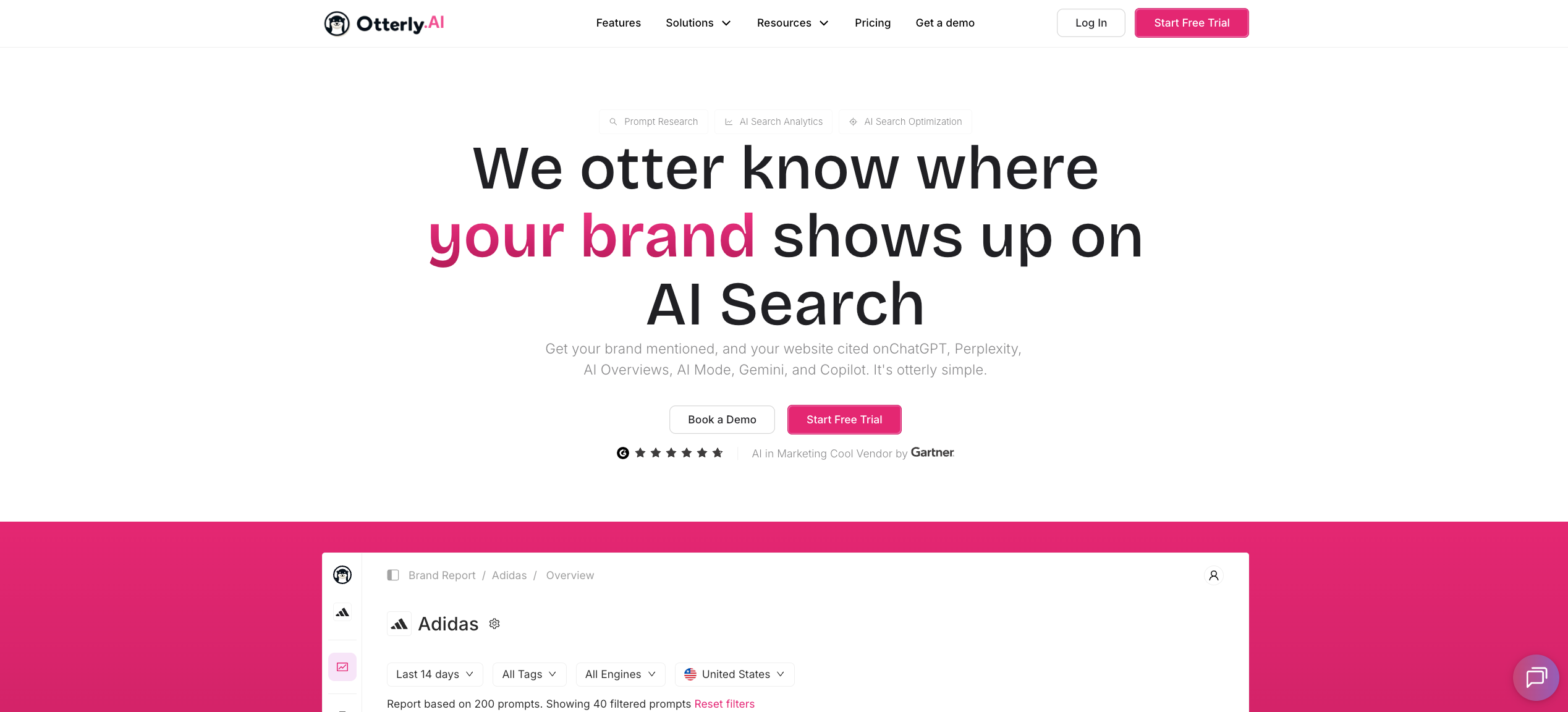
Best for: Small teams and solo marketers needing affordable AI visibility tracking with alerts.
Otterly.ai focuses specifically on monitoring brand presence across ChatGPT, Google AI Overviews, and Perplexity. It’s the budget-friendly entry point into AI visibility tools without sacrificing core functionality.
Key features:
- Multi-platform tracking (ChatGPT, AI Overviews, Perplexity)
- Real-time alerts when citation status changes
- Clean visibility index that’s easy to share with stakeholders
- Unlimited team members on all plans
Pricing: Starts at $29 per month.
Considerations: No accuracy detection or hallucination monitoring. Best as a starter tool that scales with your needs.
Peec AI
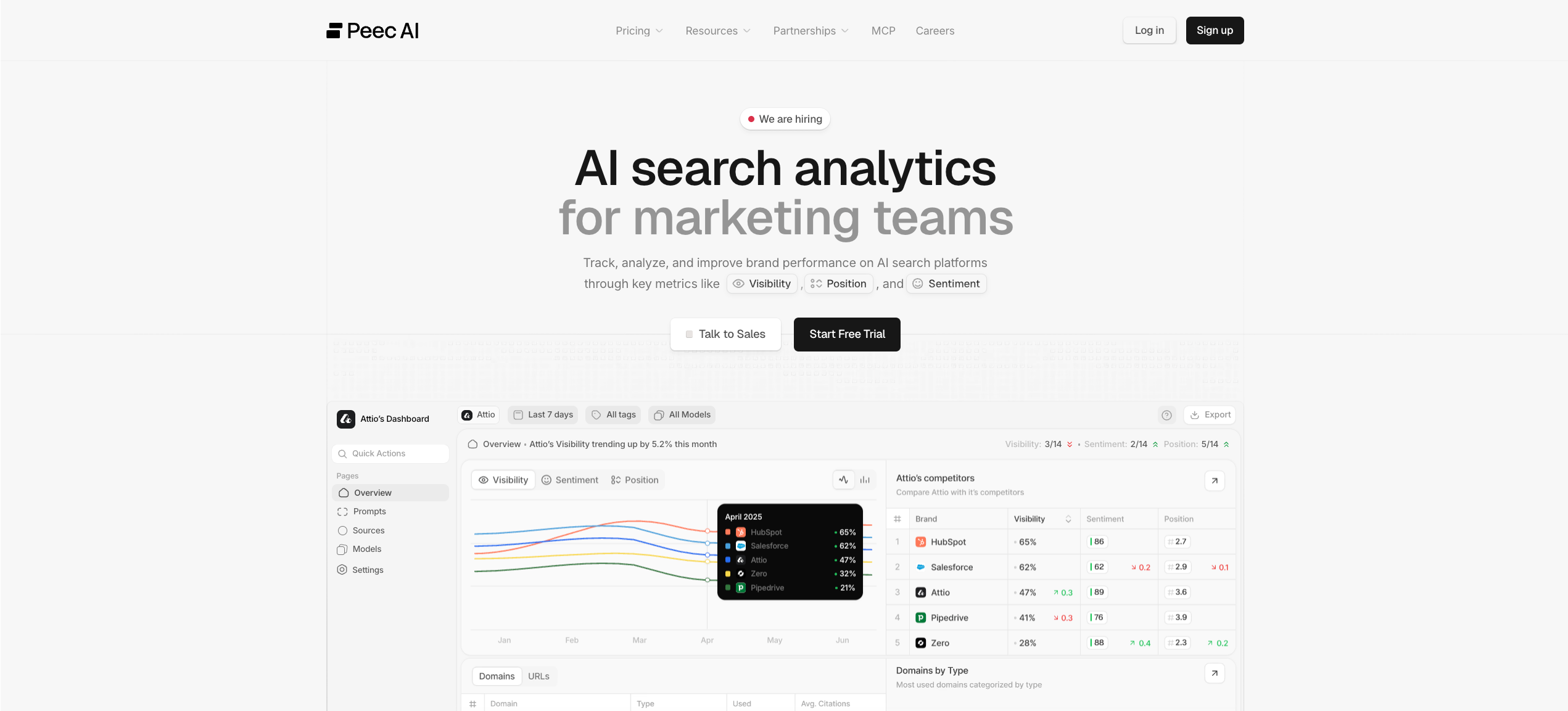
Best for: Teams that want AI visibility data turned into a prioritized action list rather than another dashboard.
Peec AI’s “Actions” feature is its standout differentiator. Instead of showing raw data, it groups visibility opportunities into prioritized to-do lists with priority scores, eliminating the manual work of figuring out what to fix first.
Key features:
- Daily tracking across major AI engines (ChatGPT, Gemini, Claude, Perplexity, Copilot)
- Prioritized “Actions” feature for content gaps and source opportunities
- Competitor benchmarking
- API access and Looker Studio integration
- Custom model selection on enterprise plans
Pricing: Custom pricing based on plan tier.
Considerations: Strongest when paired with a team willing to act on the recommendations. The action engine is the value, not just the tracking.
Semrush AI Visibility Toolkit
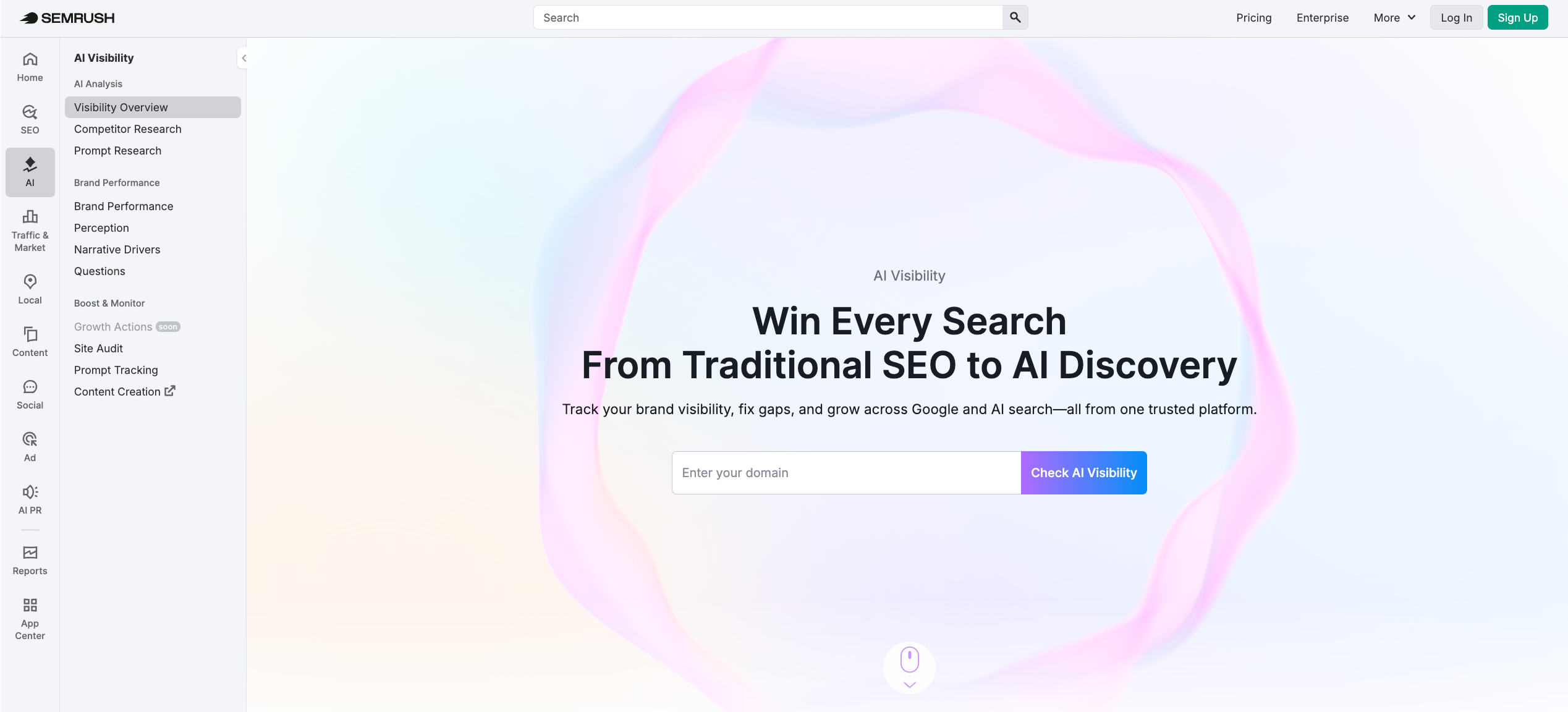
Best for: Existing Semrush users who want to add AI tracking to their current SEO platform.
Bundled with Semrush subscriptions, this toolkit tracks brand mentions across AI platforms, provides share-of-voice comparisons, and correlates citation frequency with sentiment. It’s the natural choice if Semrush is already your primary seo platform.
Key features:
- Brand mention tracking across major AI search engines
- Share of voice comparisons against competitors
- Sentiment analysis (positive, neutral, negative)
- Topic association analysis showing how AI engines categorize your brand
- Integrated with Semrush’s broader SEO toolkit
Pricing: Bundled with Semrush starting at $139.95 per month.
Considerations: Only worth it if you’re already paying for Semrush. Standalone, dedicated tools offer more depth.
SE Ranking AI Overviews Tracker
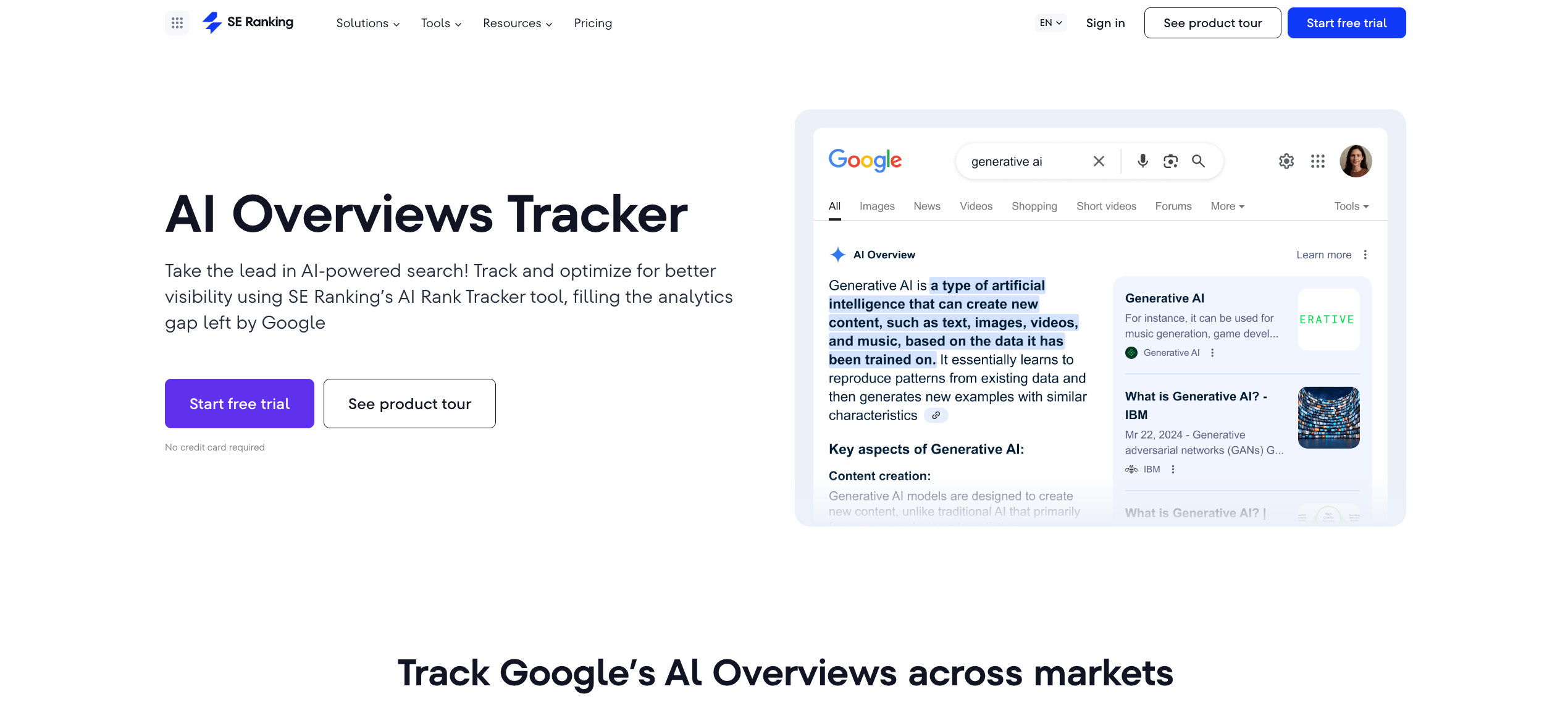
Best for: Teams focused specifically on Google AI Overviews tracking alongside traditional rank tracking.
SE Ranking is a comprehensive seo software platform with a dedicated AI Overviews Tracker. It monitors how your brand appears in Google AI Mode and AI Overviews, paired with traditional rank tracking, site audits, and keyword research.
Key features:
- Google AI Overviews and AI Mode tracking
- Traditional keyword tracking and rank tracking
- Site audits and backlink analysis
- Keyword research tool with search volume data
- Competitive research
Pricing: Starts at around $65 per month for AI features.
Considerations: Heavily focused on Google’s AI surfaces. For multi-platform AI tracking across ChatGPT and Perplexity, you’ll need to pair it with a dedicated tool.
HubSpot AEO Grader
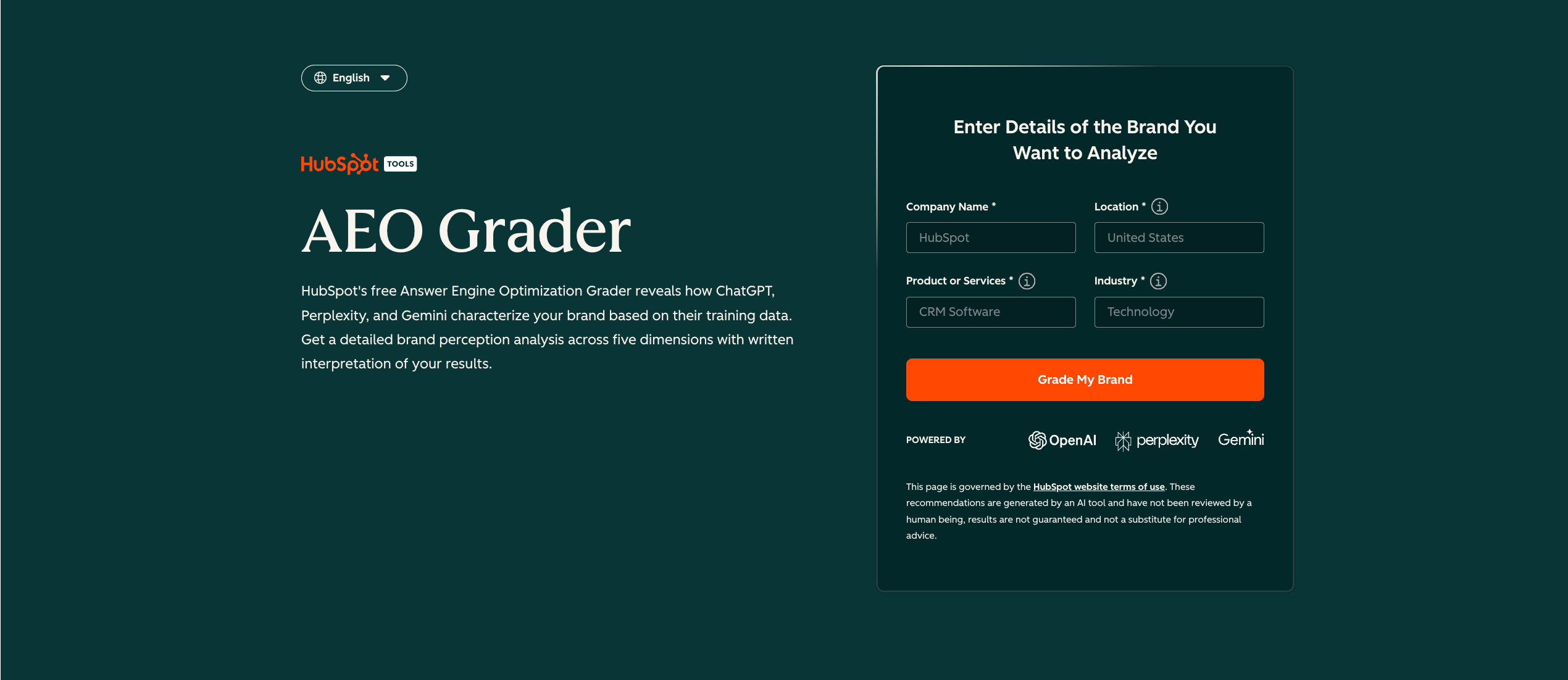
Best for: Marketing teams wanting a free starting point to benchmark current AI brand perception.
HubSpot’s AEO Grader is a free tool that evaluates how ChatGPT, Perplexity, and Gemini characterize your brand. It scores you across five dimensions: sentiment, presence quality, brand recognition, share of voice, and market position.
Key features:
- Free brand visibility scoring across three major AI platforms
- Five-dimensional scorecard with a composite score out of 100
- Sentiment and presence quality analysis
- Optional upgrade to HubSpot AEO for ongoing monitoring
Pricing: Free for the AEO Grader. HubSpot AEO is $50 per month standalone.
Considerations: Great as a one-time benchmark or starting point. For continuous tracking, you’ll need to upgrade or pair with a dedicated tool.
Ahrefs Brand Radar
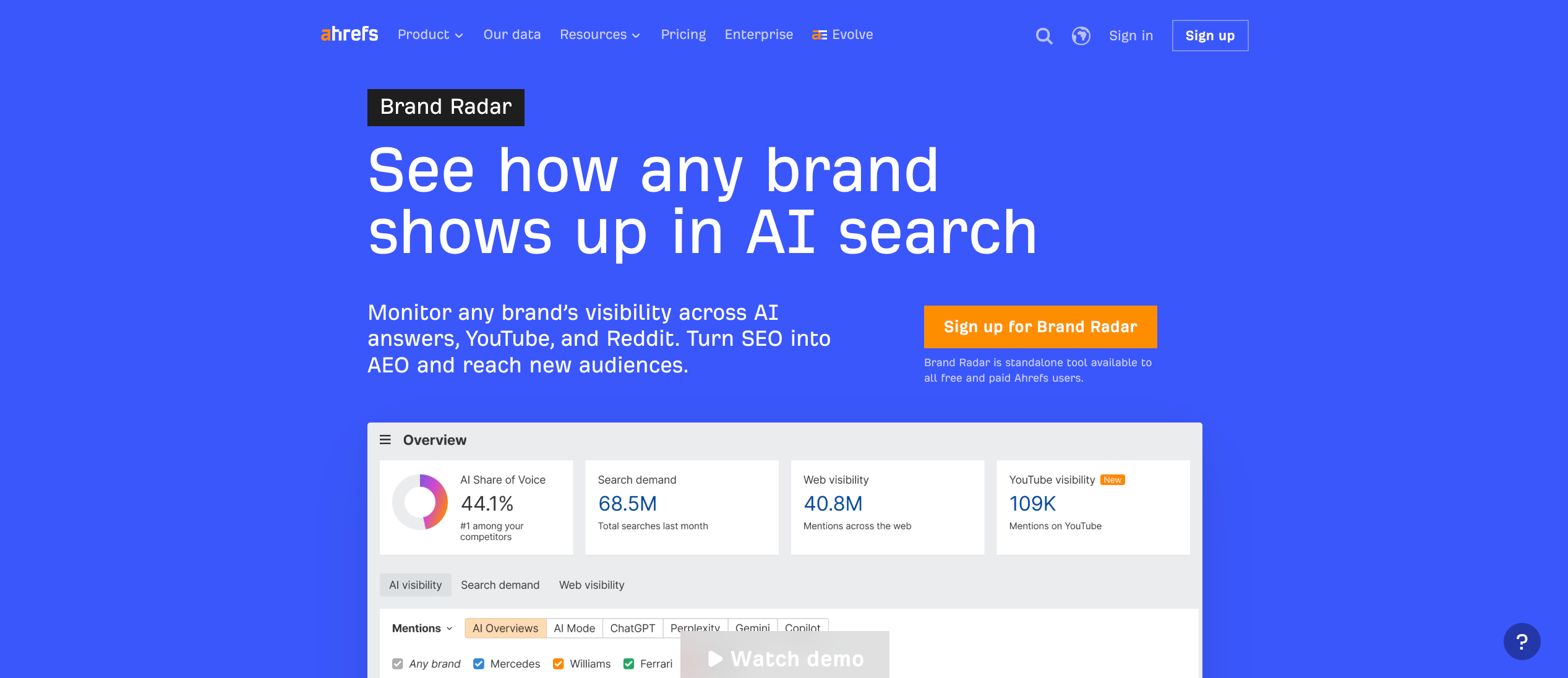
Best for: Existing Ahrefs users who want to add AI brand monitoring to their backlink analysis workflow.
Ahrefs added Brand Radar as an AI visibility add-on to its existing toolkit. It monitors linked and unlinked brand mentions across the generative landscape, layered onto Ahrefs’ core strengths in backlink analysis and content gap analysis.
Key features:
- Linked and unlinked brand mention tracking
- Integration with Ahrefs’ core backlink and keyword data
- Content gap analysis paired with AI visibility insights
- Site Explorer for organic traffic and ranking analysis
Pricing: Ahrefs starts at $129 per month. Brand Radar is a paid add-on.
Considerations: Add-on pricing makes it expensive for teams that only want AI tracking. Best when bundled with full Ahrefs usage.
Nightwatch
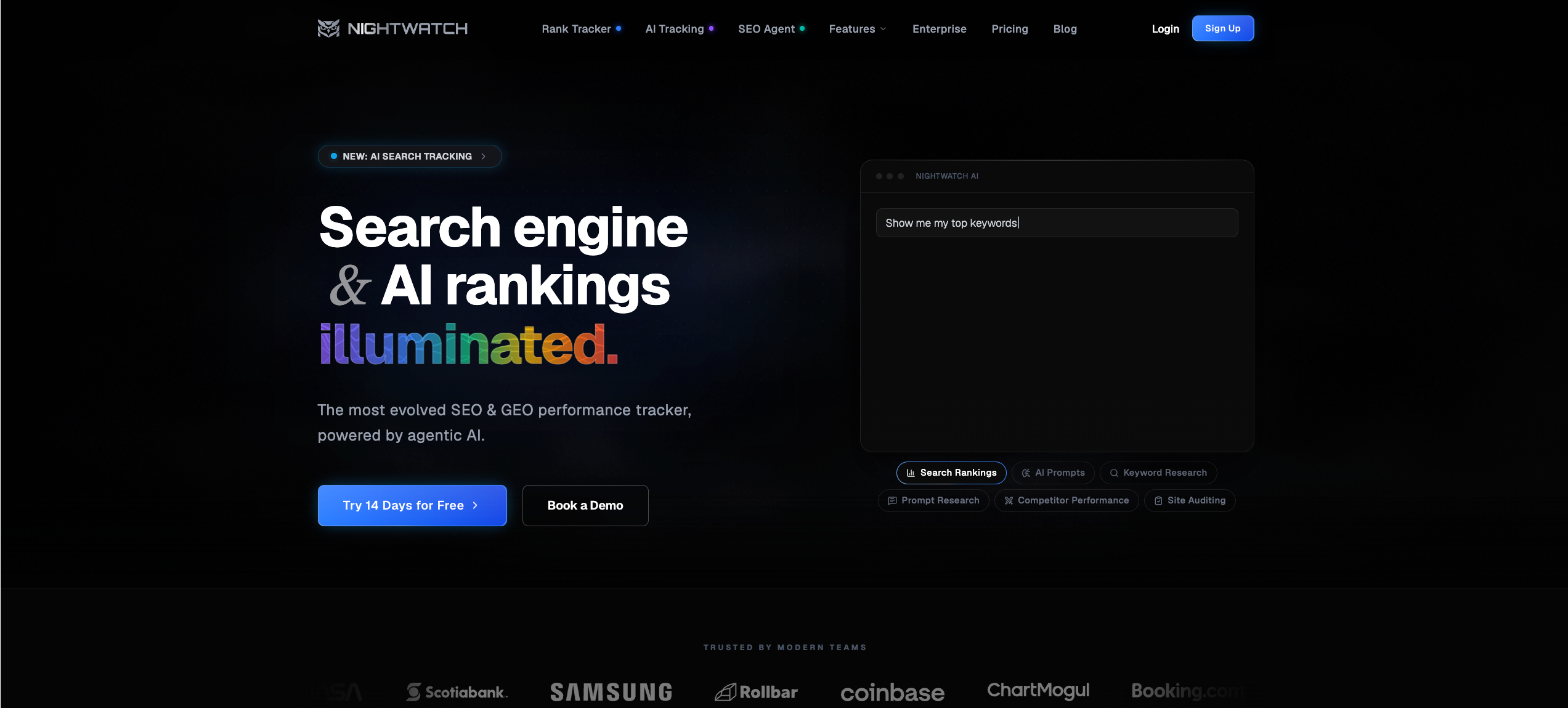
Best for: Agencies that need traditional SEO tracking and AI search monitoring in one platform.
Nightwatch combines LLM monitoring, search engine tracking, prompt research, and citation-level sentiment analysis with traditional rank tracking. It’s a versatile pick for agencies managing multiple client accounts.
Key features:
- Multi-platform AI tracking across ChatGPT, Perplexity, Gemini, Claude
- Citation-level sentiment analysis
- Traditional rank tracking and SEO monitoring
- Prompt research and discovery
- Competitor benchmarking
Pricing: Starts at around $39 per month, scales by features.
Considerations: Stronger as a hybrid platform. Dedicated AI-only tools may offer deeper visibility tracking features.
For the broader landscape of LLM SEO tools, our breakdown covers additional platforms worth evaluating.
Match the Tool to Your Team
The wrong tool wastes budget. The right one becomes the backbone of your AI SEO strategy. Here’s a practical decision framework based on team size, budget, and primary use case.
By Team Size
| Team type | Recommended tools | Why |
|---|---|---|
| Solo marketer/freelancer | Otterly.ai, HubSpot AEO Grader (free), Ubersuggest | Affordable entry points with core AI visibility tracking |
| Small in-house team (2-5) | AI Clicks, Otterly.ai, Peec AI | Mid-tier pricing with full feature sets |
| Mid-sized agency | AI Clicks, Nightwatch, AirOps | Multi-client tracking, agency-friendly pricing |
| Enterprise marketing team | Profound, AI Clicks, Peec AI Enterprise | Multi-brand tracking, custom integrations, API access |
By Primary Use Case
| Use case | Best tool |
|---|---|
| Track citations across all major AI platforms | AI Clicks |
| Optimize content for AI extraction | AirOps, Surfer SEO, Frase |
| Benchmark against competitors | AI Clicks, Peec AI, Semrush AI Visibility Toolkit |
| Track only Google AI Overviews | SE Ranking AI Overviews Tracker |
| Monitor brand sentiment in AI responses | Semrush AI Visibility Toolkit, Nightwatch |
| Free starting point | HubSpot AEO Grader |
By Budget
- Under $50/month: Otterly.ai, HubSpot AEO (after free Grader), Ubersuggest
- $50 to $200/month: AI Clicks, Nightwatch, SE Ranking, Semrush AI Visibility Toolkit
- $200 to $1,000/month: AirOps, Peec AI, Ahrefs + Brand Radar
- Enterprise ($1,000+/month): Profound, Peec AI Enterprise, AI Clicks Enterprise
By Existing Stack
If you already pay for Semrush, Ahrefs, or HubSpot, start with their AI add-ons before exploring dedicated tools. Switching costs add up. The exception: if AI visibility is becoming a core KPI, dedicated platforms like AI Clicks deliver deeper insights than bundled add-ons can match.
For a deeper look at how to build the right AI SEO measurement stack, our guide covers the operational side of the decision.
The Hidden Tracking Gaps
Even the best ai seo tracking tool leaves blind spots. Knowing the gaps helps you build a complete picture instead of trusting one dashboard blindly.
Cross-Session Inconsistency
AI generated content varies dramatically between sessions. There’s less than a 1 in 100 chance that ChatGPT or Google’s AI gives identical brand lists when asked the same question 100 times. Single-snapshot tracking misses this volatility entirely. Tools should run prompts multiple times per day to capture true visibility patterns, not just one-off readings.
Geographic and Language Variance
Most AI visibility tools track US English by default. If your business operates internationally, you need tools that monitor AI responses across countries and languages. Many premium platforms (Peec AI, Profound) offer this, but cheaper tools often don’t.
Voice and Mobile AI Search
Voice queries through Siri, Alexa, and Google Assistant pull from AI generated answers but rarely show up in standard tracking dashboards. Mobile AI search behavior also differs from desktop. Most tracking tools focus on desktop browser results and miss the mobile and voice ecosystem entirely.
Sentiment Beyond Positive/Negative
Standard sentiment analysis classifies mentions as positive, neutral, or negative. The reality is more nuanced. AI responses can describe your brand accurately, but in ways that don’t drive action. Tools that only flag negative sentiment miss the neutral-but-unhelpful category that quietly hurts conversions.
Citation Drift Over Time
A page cited today might disappear from AI answers next week. More than 50% of brands that drop from an AI answer resurface within two runs, but tracking that pattern requires daily monitoring. Weekly snapshots miss the drift entirely.
AI Mode and Emerging Surfaces
Google AI Mode is expanding fast. Most tracking tools haven’t fully adapted. Only 14% of URLs cited by AI Mode rank in the traditional top 10, which means your existing rank tracking data is a poor proxy. Specialized AI Mode tracking is still catching up across most platforms.
Conversion Attribution
Almost no AI visibility tool connects citation data to actual revenue. You’ll need to build that bridge yourself by combining AI visibility data with Google Analytics, your CRM, and self-reported lead source data. This is the gap our AI SEO services close for clients by tying tracking infrastructure directly to pipeline outcomes.
Why AI Clicks Is Our Top Pick
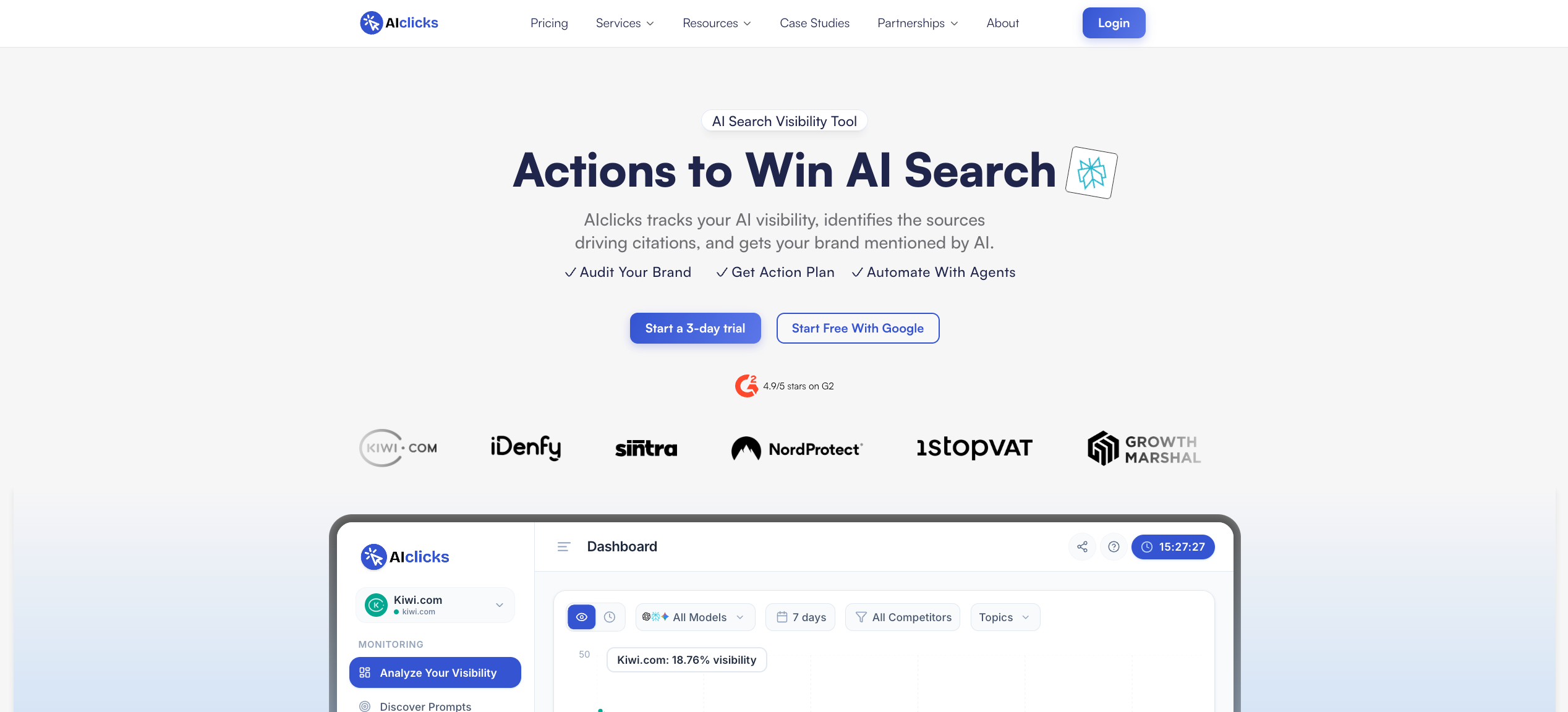
We’ve tested every major platform on this list. AI Clicks earns top spot in our daily workflow for three reasons that matter when you’re running campaigns at scale.
Consolidated Workflow
Most ai seo tools force you to bounce between three or four subscriptions. One for citation tracking, another for prompt discovery, a third for competitor benchmarking, and a fourth for content optimization. AI Clicks consolidates the entire workflow into one dashboard. Less tab-switching, faster reporting, lower combined cost.
Coverage Across Every Major AI Engine
AI Clicks tracks brand visibility across ChatGPT, Gemini, Claude, Perplexity, and Google AI Overviews simultaneously. Source attribution shows exactly which URLs each platform pulls from, which makes it possible to engineer placement strategies around actual citation behavior instead of guesswork.
Built for Agencies and In-House Teams
The platform handles multi-client tracking, prompt libraries by industry, and competitor benchmarking without nickel-and-diming on seats or features. Whether you’re managing a single brand or 30 client accounts, the workflow scales.
What It Doesn’t Replace
AI Clicks isn’t an all-in-one SEO platform. You still need:
- Ahrefs or Semrush for backlink analysis and keyword research
- Google Search Console and Google Analytics for organic traffic data
- A content optimization tool like Surfer SEO or Frase for content creation workflows
The combination of AI Clicks, a traditional SEO platform, plus native analytics covers every measurement angle without paying for redundant features.
How We Use It Daily
A typical client workflow:
- Run weekly prompt sets for the client’s category through AI Clicks
- Document citation rate, mention rate, and share of voice changes
- Pull source attribution data to identify content gaps
- Cross-reference with Google Search Console for traditional ranking trends
- Build the next month’s content roadmap based on the gaps AI Clicks surfaces
This is the operational backbone of how we deliver AI SEO results for clients across industries. Tools matter, but the workflow built around them is what turns AI visibility data into measurable growth.
If you want to test it yourself, AI Clicks offers a free trial so you can see what your AI search visibility looks like across every major platform before committing to a plan.
How to Get the Most From Your AI SEO Tools
Picking the right tool is half the battle. Getting real value from it depends on how you build your workflow, what you actually track, and how you turn AI visibility data into action. Here’s how to maximize the ROI of your AI SEO tools stack.
Build a Hybrid Stack, Not a Single Subscription
No single tool covers everything. The best AI SEO tools handle visibility tracking beautifully but leave gaps in keyword research, content optimization, and traditional rank tracking. A complete stack typically combines:
- One AI visibility tracker, like AI Clicks or Otterly.ai, for citations and brand mentions
- One traditional SEO platform, like Ahrefs or Semrush, for backlink analysis and keyword data
- One content optimization tool, like Surfer SEO or Frase, for AI SEO optimization and content editor workflows
- Free essentials, including Google Search Console, Google Analytics, and Google Keyword Planner
This hybrid approach mirrors how the digital marketing tool market has evolved. Specialization beats one-size-fits-all in 2026.
Use AI Writers Strategically, Not Lazily
AI writers like Surfer SEO, Frase, and Jasper accelerate content creation, but AI generated content alone rarely earns citations in AI answer engines. The trick is using AI to draft and humans to refine. AI handles structure and keyword insights. Humans add original perspectives, expert commentary, and the kind of E-E-A-T signals that earn brand mentions in AI generated search results.
Best practices for AI writer output:
- Use AI to generate first drafts based on top-ranking pages and content gaps
- Add original data, case studies, and expert commentary before publishing
- Run the final draft through a content editor that scores for both Google and AI search platforms
- Avoid pure AI generated content because AI answer engines increasingly de-prioritize it
Pair Keyword Research With Prompt Research
Traditional keyword research tools like Google Keyword Planner show search volume and keyword suggestions for blue link queries. They don’t capture how people actually phrase questions in ChatGPT or Perplexity.
The fix: pair traditional keyword research with prompt-based research from your ai tracker. Tools like AI Clicks, Profound, and Peec AI surface the natural-language prompts driving AI search traffic in your category. Combine both data sources to identify content gaps that traditional SEO tools miss entirely.
Set Up Cross-Tool Reporting
The biggest workflow win: connecting your AI visibility tools to a single reporting layer. Most platforms integrate with Looker Studio, which lets you build dashboards that pull from:
- AI visibility tracking data (citation rate, mention rate, share of voice)
- Google Search Console (impressions, clicks, AI Overview appearances)
- Google Analytics (AI-referred traffic, conversion rates)
- Traditional rank tracking from your SEO platform
API access matters here. Tools like Peec AI and AI Clicks offer robust APIs that let you push data into custom dashboards instead of being locked into vendor reporting templates.
Train Your Team on the Learning Curve
Even the most intuitive AI visibility tracking tools have a learning curve. SEO professionals coming from traditional rank tracking backgrounds need time to adjust to:
- Prompt-based tracking instead of keyword position tracking
- Citation rate as a primary KPI instead of click-through rate
- Multi-platform monitoring across ChatGPT, Perplexity, Gemini, Claude, and Copilot
- Search intent interpretation in natural language vs exact-match keywords
Budget at least two weeks of onboarding time when adding a new tool to your stack. Skip this step and you’ll pay for features your team never uses.
Audit Your Stack Quarterly
The AI search monitoring space evolves faster than any other category in seo software. Tools that lead the market today may be outpaced by new entrants in six months. Audit your stack every 90 days:
- Are you using all the features you’re paying for?
- Has a competing tool added capabilities that close gaps in your current workflow?
- Are you tracking the right AI search platforms for your audience?
- Is the cost per insight still justified?
The brands getting the most from their AI seo tools treat the stack as a living system, not a fixed subscription bundle.
Don’t Forget Site Audits and Technical Foundations
Visibility tracking is useless if the underlying site can’t be crawled. Run regular site audits using tools like Screaming Frog, Ahrefs Site Audit, or SE Ranking’s built-in auditor. The goal: catch broken links, schema errors, and Core Web Vitals issues before they tank your AI search rankings.
This combination of visibility tracking, content optimization, traditional SEO tasks, and technical foundations is what separates tools that look good in a demo from tools that actually deliver brand visibility gains. We build this layered approach into every client engagement at our AI SEO agency, ensuring no part of the AI search visibility tracking workflow gets neglected.
Build Your AI SEO Stack With Doc Digital SEM
The brands winning AI search in 2026 stopped relying on traditional SEO tools alone. They built hybrid stacks combining AI visibility platforms, traditional SEO software, and native analytics into one workflow. The right tools don’t just track. They surface the gaps competitors are exploiting before you even notice them.
Key takeaways:
- Multi-platform coverage across ChatGPT, Gemini, Perplexity, Claude, and AI Overviews is non-negotiable
- AI Clicks consolidates citation tracking, prompt monitoring, and competitor benchmarking in one dashboard
- Match the tool to your team size, budget, and primary use case rather than chasing feature lists
- Pair AI visibility tools with traditional SEO platforms for complete measurement coverage
- Even premium tools leave gaps in voice search, geographic variance, and revenue attribution
- Audit your stack quarterly because the AI tracking space evolves faster than any other category
If your current stack still tracks rankings without measuring AI visibility, you’re missing where buying decisions actually happen. At Doc Digital SEM, we build AI SEO measurement workflows using AI Clicks and a hand-picked tool stack. Want a free audit? Let’s talk.
FAQs
What Are the Best AI SEO Tools in 2026?
AI Clicks, Profound, AirOps, Otterly.ai, and Peec AI lead the pack. The best AI powered SEO tools combine citation tracking, prompt monitoring, and competitor benchmarking in one dashboard.
Are Free AI SEO Tools Worth Using?
Yes, as a starting point. Free AI tools like HubSpot AEO Grader and Google Search Console give baseline AI search results data before you invest in paid AI optimization tools.
Do I Need Both Traditional SEO and AI Powered SEO Tools?
Yes. Traditional SEO tools handle backlinks and rankings, while AI powered SEO tools track citations and mentions. Use both together for complete search visibility coverage.
How Often Should I Check My AI SEO Tracking Tool?
Daily for alerts, weekly for deep tracking. AI search results shift constantly, so set automated monitoring through SEO AI tools and review trends weekly.
Can One Tool Replace All Other Tools in My SEO Stack?
No. The best AI powered solution combines a dedicated AI tracker, a traditional SEO platform, and other tools like content optimization software for complete coverage.


