


The customer who used to type “best contractor near me” into Google is being replaced by an AI agent that searches, compares, evaluates, and chooses on their behalf. The user never sees a SERP. They never visit your site. They get a recommendation, a confirmation, and a transaction, all inside an AI conversation.
30% of marketers have already experienced decreased search traffic as consumers turn to AI tools for research and purchase decisions, and 92% say they plan to optimize for both traditional and AI-powered search engines. The shift isn’t theoretical anymore.
Here’s what we’ll unpack:
- The shift from human searchers to AI agent searchers
- How search behavior is changing and why your funnel is collapsing
- What dies in traditional SEO when AI agents take over
- The new SEO playbook for the AI agent era
- What this means for your team, your tools, and your budget
This is the territory Doc Digital SEM lives in. Through our LLM SEO services and GEO agency work, we build the structured, citable, agent-ready foundations brands need to stay visible when the searcher is no longer human at all.
From Human Searchers to AI Searchers
For 25 years, SEO assumed one thing: a human types a query. Every tactic, tool, and metric was built around that assumption. AI agents just broke it.
The new searcher isn’t a person. It’s an autonomous system browsing on behalf of one. That changes who you’re optimizing for, what they care about, and how you measure whether you won.
The Three Generations of Searchers
| Era | Who Searches | What They Want | What Wins |
|---|---|---|---|
| Traditional Search | Humans typing keywords | Ten blue links to evaluate | Page rankings, CTR, traditional SEO |
| AI Search | Humans asking AI tools | A direct, synthesized answer | Citations, AI overviews, content quality |
| Agentic Search | AI agents acting on behalf of humans | A decision and a transaction | Structured data, machine readability, agent visibility |
Each generation didn’t kill the last. It layered on top. Right now, all three coexist, but the share of agentic search is climbing fast, and the brands that ignore it are quietly losing market share they’ll never see in their analytics tools.
What an AI Agent Actually Does
When AI agents begin a search session, they don’t behave like a human. They:
- Pull from multiple data sources at once (search engines, knowledge graphs, APIs, directories)
- Cross-reference claims to verify accuracy
- Compare options against the user’s stated goal
- Make a decision based on extractable facts, not persuasive copy
- Often complete the transaction without ever returning to the user
The agent doesn’t admire your homepage. It doesn’t read your testimonials. It doesn’t get nudged by your CTAs. It scans your structured data, interprets your facts, and moves on.
💡 Pro tip: If your SEO strategy still treats every searcher as human, you’re optimizing for a smaller and smaller share of your real audience.
This is exactly the shift our AI SEO agency is built around. We restructure brands for both human users and AI systems, because both will keep searching for years to come, just in different ways.
Why Your Funnel Is Collapsing

The traditional marketing funnel was a beautiful piece of architecture. Awareness at the top, consideration in the middle, decision at the bottom, and revenue at the end. Every stage was an optimization opportunity.
AI agents collapse the entire structure into a single conversation. The user states a goal. The agent handles every stage. The user only re-enters when the transaction is done.
What’s Actually Changing in Search Behavior
Five behavioral shifts are reshaping how customers actually find and choose brands:
- Search has become conversational. Queries are longer, more specific, and structured around real user intent rather than keyword strings.
- Discovery happens inside AI tools. Customers ask ChatGPT, Gemini, or Perplexity for recommendations long before they hit Google.
- Decisions get made before the click. AI generated responses, AI summaries, and AI overviews give users enough to choose without visiting a single site.
- Trust signals shifted. Reviews, third-party mentions, and consistent NAP now matter more than meta tags or backlinks alone.
- Transactions are moving inside AI conversations. Agentic commerce means the funnel ends inside the chat, not on your checkout page.
The Funnel Compression in Plain English
Here’s what’s happening to the classic funnel:
| Old Funnel Stage | What’s Replacing It |
|---|---|
| Awareness | AI summaries that mention (or skip) your brand |
| Consideration | AI agent comparing your brand against competitors invisibly |
| Decision | Structured data extraction and authority signals |
| Action | Agentic commerce protocols, often without a site visit |
Every stage now happens inside an AI ecosystem you don’t fully control. Your job isn’t to walk the user through the funnel anymore. Your job is to make sure your brand is the one the AI picks at every stage.
What This Means in Practice
If you’re still spending 80% of your marketing budget on click-driven channels, you’re funding a model that’s quietly being decommissioned. The brands winning right now are reallocating toward:
- Generative engine optimization to earn citations across AI driven search results
- Schema markup and structured data so AI systems interpret their content correctly
- Topical authority built through deep, well-organized content clusters
- Digital PR and brand mentions that build trust signals AI tools weight heavily
For a deeper read on how this all connects, our breakdowns on GEO vs SEO and AI search visibility cover the strategic shifts every marketing team needs to make right now.
What Dies in Traditional SEO
Traditional SEO didn’t die overnight, but several core tactics have lost their teeth, and pretending otherwise is expensive.
The Tactics That Stopped Working
These are the SEO tactics that no longer move the needle in an AI-driven landscape:
| Old SEO Tactic | Why It’s Failing |
|---|---|
| Keyword density obsession | AI systems extract entities and meaning, not keyword frequency |
| Manual keyword research at scale | AI tools now do this faster, deeper, and with predictive insight |
| Cookie-cutter location pages | AI overviews ignore thin, duplicated content |
| Generic blog posts targeting volume | AI generated answers replace the need to read most listicles |
| Backlink quantity over quality | AI weights brand mentions and topical authority more than raw link counts |
| Optimizing only for ranking pages | Ranking #1 doesn’t guarantee citation in AI summaries |
| Click-driven success metrics | Zero-click search makes CTR a misleading vanity metric |
Why These Tactics Failed
The common thread? They all assumed a human reading a SERP. They optimized for visibility on a results page, not for being chosen by an AI system. That’s a category mismatch. AI systems interpret content differently, weight signals differently, and make recommendations differently.
What Still Works
Not everything is dying. The fundamentals that survived are the ones that align with how AI tools actually evaluate content:
- Strong technical SEO (clean HTML, fast load times, mobile-first, no broken links)
- Topical authority built through interlinked content clusters
- Comprehensive understanding of user intent, expressed clearly and concisely
- Schema markup and structured data that help AI tools parse your site
- Quality content backed by real expertise (E-E-A-T isn’t dead, it’s amplified)
- Strong internal links that signal topical relationships
The skill isn’t abandoning SEO. It’s knowing which 30% of your old playbook still works and pairing it with the 70% that’s brand new.
📊 Worth knowing: AI driven SEO isn’t a replacement for traditional SEO. It’s an expansion. The brands that thrive in 2026 layer agentic optimization on top of strong SEO foundations, not instead of them.
The New SEO Playbook for AI Agents
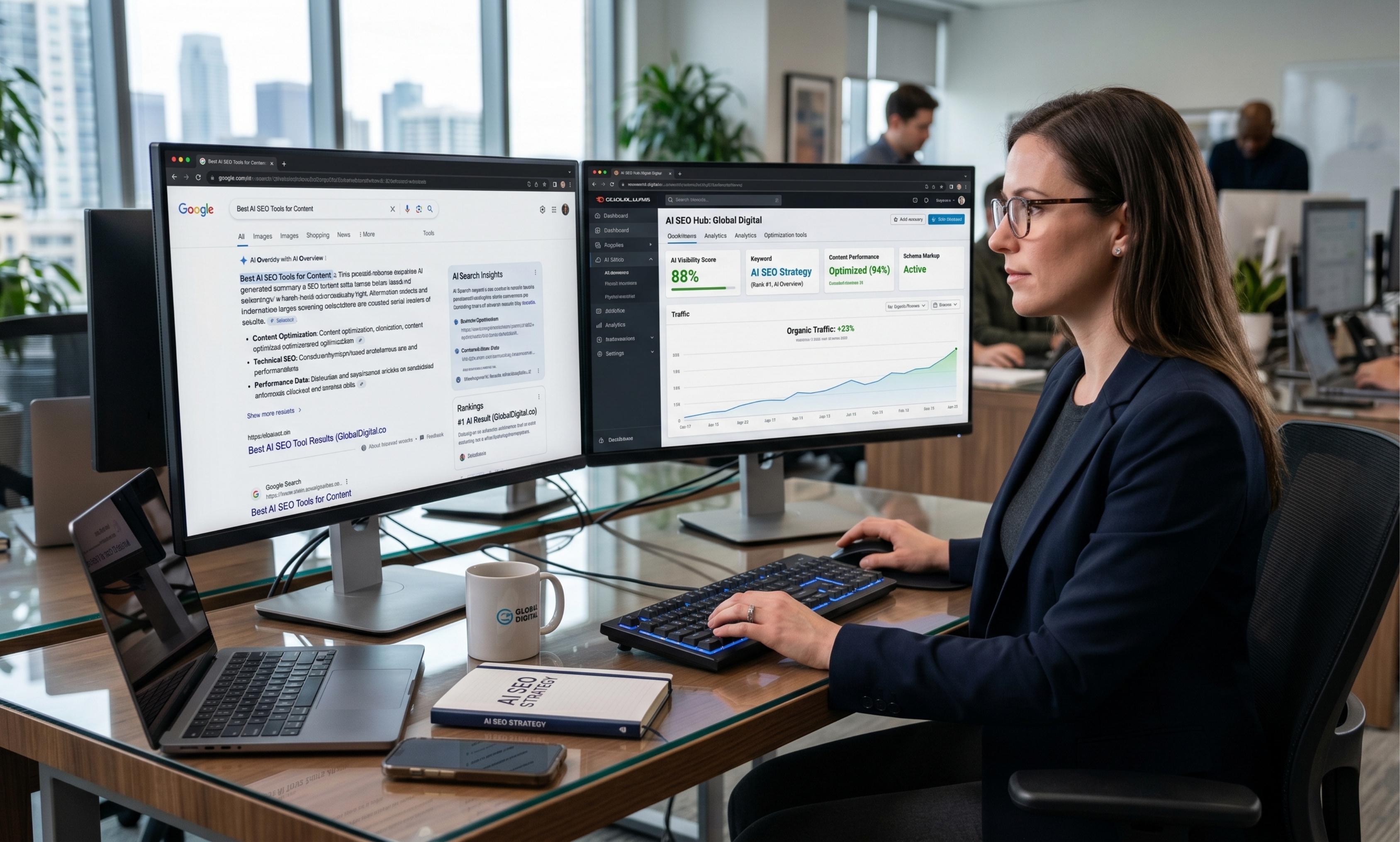
The new SEO playbook isn’t a tweak. It’s a structural rebuild around how AI systems retrieve, evaluate, and recommend content.
The Eight Pillars of AI-Era SEO
These are the priorities every modern SEO strategy needs to cover:
- Machine-readable everything. Plain HTML for core content. Schema markup on every important page. Structured data for products, services, prices, and policies.
- Entity-first content. Name brands, locations, and products explicitly. Build clear semantic relationships across your content cluster.
- Front-loaded answers. First 50 to 100 words of every page should answer the core question directly. AI tools extract that block first.
- Conversational structure. H2s and H3s phrased as real questions. FAQ blocks. Bullet points. Tables for comparisons.
- Citation worthiness. Original data, named experts, verifiable facts, and consistent updates. AI tools cite content they can trust.
- Crawl access for AI bots. Allow GPTBot, ClaudeBot, PerplexityBot, GoogleOther, and OAI-SearchBot in your robots.txt.
- Topical depth, not topical sprawl. Content optimization should focus on becoming the definitive resource on a few topics, not a shallow source on many.
- Cross-platform brand presence. Reddit, Quora, Wikipedia, industry directories, review sites, and YouTube. AI agents triangulate across all of them.
The Mental Model Shift
The old mental model was “how do I rank?” The new one is “how does my content get chosen?” That’s a totally different question.
Ranking is about position. Being chosen is about clarity, trust, and structure. The brands that internalize this shift are the ones AI systems quote, recommend, and transact with.
What to Ship Next Quarter
If you’re starting from scratch, this is the 90-day priority list:
- Audit your robots.txt to confirm AI agents can access your site
- Add comprehensive schema markup across your top 20 pages
- Restructure those pages with TL;DR answers, FAQ sections, and comparison tables
- Identify content gaps in your topical clusters and fill them with depth, not volume
- Build an llms.txt file as a clean roadmap for language models
- Launch citation tracking across at least three AI tools
This is exactly the kind of structured rebuild we ship for clients through our LLM SEO services and Generative Engine Optimization work. For a tactical primer on the schema layer, our breakdown on structured data for LLM optimization covers the implementation details most teams skip.
What This Means for Your Team and Budget
The biggest blind spot in the AI agent shift isn’t strategic. It’s operational. Most teams are trying to bolt AI-era SEO onto a 2022 org chart and a 2022 budget. Both need to change.
How SEO Teams Are Restructuring
The traditional SEO team had three or four specialists doing manual work. The new SEO team is smaller in headcount but broader in capability:
| Old Team Role | New Equivalent |
|---|---|
| Keyword researcher | Entity and intent strategist |
| On-page optimizer | Schema, structured data, and AI extractability specialist |
| Link builder | Digital PR + brand mention strategist |
| Content writer | AI-assisted editor focused on originality and authority |
| Technical SEO | Agent infrastructure architect (crawl, schema, llms.txt, MCP) |
| Reporting analyst | AI visibility analyst (citation tracking + traditional metrics) |
SEO professionals aren’t being replaced. Their job description is being rewritten. The teams that learn how AI agents transform SEO workflows are the ones that win.
The Tools That Actually Matter Now
Your old SEO stack isn’t enough. Most modern teams now run:
- Traditional SEO platforms (Ahrefs, Semrush, Search Console) for foundational signals
- AI citation trackers (Profound, Goose, Rankeo, Yoast Brand Insights) for AI visibility
- Crawl access checkers (Firecrawl, custom log analysis) to verify agent access
- Schema validation tools for structured data accuracy
- AI-powered content tools for content optimization, brief generation, and continuously monitoring performance
- Custom dashboards combining all of the above into a single view
The trick isn’t buying every tool. It’s building a stack where AI tools handle repetitive tasks at scale, and humans focus on judgment and creativity.
Budget Reallocation in Plain Numbers
Here’s roughly how leading brands are shifting their SEO budget for 2026:
| Spend Category | 2022 Allocation | 2026 Allocation |
|---|---|---|
| Traditional SEO (links, on-page, content) | 70% | 35% |
| AI search optimization (GEO, LLM SEO, AEO) | 0% | 30% |
| Schema, structured data, technical SEO | 10% | 20% |
| AI visibility tracking + tooling | 0% | 10% |
| Digital PR and brand mentions | 20% | 15% |
The math isn’t comfortable, but it’s accurate. If 30% of search behavior is shifting toward AI agents, your budget needs to move with it.
Why Human Oversight Still Wins
Don’t read this as “let AI do everything.” The brands getting AI driven SEO wrong are the ones automating without judgment. AI tools accelerate execution. Human expertise still drives strategy, brand voice, and quality control.
The right balance:
- AI handles repetitive tasks, data analysis, content drafts, schema generation, audit automation
- Humans handle strategic direction, brand voice, fact-checking AI generated content, editorial judgment, crisis response
Keeping human creativity in the loop isn’t sentimental. It’s competitive. AI generated summaries and AI generated answers all start to sound the same. The brands with real human insight stand out faster, win citations more often, and earn the trust AI tools weigh most heavily.
💡 Pro tip: Audit your team and budget the same way you’d audit your site. If 90% of your spend still goes to tactics built for 2022 search behavior, you’re funding the past while your competitors fund the future.
This operational shift is where most teams stall. It’s also where Doc Digital SEM’s SEO services make the biggest difference. We help businesses restructure not just their site but their workflows, balancing automation with human judgment so your brand stays visible across every search environment that matters now and the ones coming next.
The shift is happening whether your team is ready or not. The brands that move first will own the citations, the recommendations, and the transactions for the next decade. The ones that wait will spend years catching up to a position they used to hold for free.
What’s Coming Next in AI Search

Here’s the thing about AI search and agentic SEO. Everything we’ve covered so far is just the beginning. The shift from blue links to AI overviews to autonomous AI agents is happening on a curve, not a line, and the next 18 months will reshape search optimization more than the last five years combined.
Knowing the trends now is how you stay ahead, not how you catch up.
Six Trends Shaping the Next Phase
These are the developments every SEO team should be tracking right now, because they’ll define the playbook for 2027 and beyond:
- AI overviews are expanding into every query type. Google AI Overviews now appear on 80%+ of informational searches, and they’re moving fast into commercial and transactional queries.
- Autonomous AI agents are starting to transact. As AI agents begin completing purchases and bookings end to end, brands without machine-readable inventories and prices will lose share quietly.
- AI powered tools are starting to predict search trends. Predictive analytics now identify emerging trends before they spike, giving early movers weeks of a head start.
- Search optimization is splitting into specialties. GEO, AEO, LLM SEO, and agentic SEO are becoming distinct disciplines with their own tools, metrics, and best practices.
- Data quality is becoming a ranking factor. AI models reward consistent, accurate, structured information across multiple data points. Conflicting facts get your brand skipped.
- Brand voice and originality matter more, not less. As AI generated content floods the internet, real human expertise becomes the rare signal that earns citations.
How AI Models Are Changing the Game
The way AI systems interpret your content has fundamentally shifted from keyword matching to comprehensive understanding. Three things matter most now:
| Old Signal | New Signal |
|---|---|
| Target keywords and keyword placement | Entity recognition and semantic relationships |
| Single-source content | Cross-referenced content from multiple data sources |
| Page rank | Topical authority and citation frequency |
| Backlink count | Brand mentions across trusted platforms |
| Meta tag optimization | Structured data signaling relationships and context |
This isn’t a tweak to old SEO tactics. It’s a new framework for how content gets surfaced, evaluated, and used to generate answers.
How Agentic SEO Will Transform Your Business Model
Here’s the part most marketing teams haven’t fully internalized. The shift to agent-driven search isn’t just a marketing problem. It’s a business model problem.
When AI agents do the searching, the business model changes in three ways:
- Your inventory has to be live. Static product pages won’t work. Real-time pricing, availability, and policies need to be machine-accessible.
- Your content has to compound. Single blog posts won’t move the needle. Topical clusters that demonstrate deep expertise will.
- Your brand has to be everywhere. AI tools triangulate across reviews, directories, social platforms, and forums. A site-only presence is no longer enough.
That’s why how agentic SEO will transform SEO isn’t really an SEO conversation. It’s a strategic conversation about how your brand exists across the entire AI-accessible internet.
What Smart Teams Are Doing Right Now
The teams winning the next phase aren’t waiting for “more data.” They’re shipping changes today:
- Building schema-rich content systems that AI search and search engine crawlers can both interpret
- Restructuring blogs around topical clusters that target search intent, not isolated keywords
- Rolling out llms.txt files and MCP endpoints to prepare for agent-driven commerce
- Auditing brand voice consistency across every platform that AI tools reference
- Tracking search visibility across at least four AI engines, weekly, with documented prompts
💡 Pro tip: Don’t optimize for what AI agents do today. Optimize for what they’ll do in 12 months. The brands that build now for autonomous AI agents will own their categories before the rest of the market catches up.
Where Doc Digital SEM Fits
The brands that will win the next phase aren’t the ones with the biggest teams or the deepest pockets. They’re the ones with the cleanest data, the strongest topical authority, and the most consistent presence across every surface that AI tools index.
That’s the foundation our team builds for clients across every engagement, blending LLM SEO, GEO, AEO, and AI search optimization into a unified strategy. The goal isn’t to keep up with what AI does today. It’s to position your brand for what AI agents and human users will both reward 12 months from now.
Search isn’t disappearing. It’s evolving into something more powerful, more conversational, and more agent-driven than anything that came before. The brands that move now don’t just stay ahead. They define the new ground floor.
Stay Ahead of AI Search With Doc Digital SEM
AI agents are rewriting the rules of search behavior, and the old SEO playbook isn’t coming back. The brands that adapt now will own their categories for the next decade. The ones that wait will spend years catching up to a position they used to hold for free.
Here’s what to remember:
- AI agents are replacing human searchers in a growing share of queries
- The traditional funnel is collapsing into a single AI conversation
- Old SEO tactics like keyword density and click metrics are dying
- Schema, structured data, and topical authority are the new fundamentals
- Teams, tools, and budgets all need to shift toward AI-driven workflows
- Human creativity and oversight still decide who wins
The shift to AI agent search rewards brands that move now and quietly punishes those that wait. Doc Digital SEM builds the structured, citable, agent-ready foundations your business needs to stay visible when the searcher isn’t even human anymore. Get your free AI visibility audit (valued at $1,500) or explore our LLM SEO services and get ahead before your competitors do.
FAQs
How will AI agents change SEO in 2026?
AI agents shift digital marketing from ranking for humans to optimizing content structure for machines that analyze data, identify gaps, and recommend brands autonomously.
Will AI replace SEO specialists?
No. AI handles repetitive tasks and content creation, but SEO specialists provide strategy, judgment, and brand expertise that AI tools and just humans alike still rely on.
How does AI search affect website traffic?
AI search reduces clicks but improves conversion quality. Digital marketing teams now measure citation frequency and AI visibility alongside traditional traffic metrics.
What’s the biggest SEO change AI agents will bring?
AI agents need machine-readable content, schema markup, and tool access. Sites without a structured content structure get skipped, no matter how strong the human-facing copy.
How do I prepare my site for AI agents?
Open robots.txt to AI bots, add schema, restructure content with clear answers, and audit content structure regularly. SEO specialists can identify gaps faster than manual reviews.


