


Your customers are now buying products inside AI conversations. No website visits. No checkout pages. Just a chat prompt and a purchase. OpenAI’s integration with Stripe has turned ChatGPT into a shopping assistant that handles transactions on the spot, and businesses that ignore this shift risk becoming invisible.
This guide breaks down everything you need to know:
- What Stripe payments in ChatGPT actually are
- How agentic commerce and the new protocol work
- The customer checkout experience explained
- Opportunities and drawbacks for e-commerce brands
- Why dedicated AI chatbots might be smarter than relying on ChatGPT
- Pricing breakdowns for Instant Checkout vs. alternatives
At Doc Digital SEM, we help businesses stay visible wherever customers are searching, including AI platforms like ChatGPT, Perplexity, and Google SGE. If conversational commerce has you rethinking your strategy, we can help you figure out what’s next.
What Are Stripe Payments in ChatGPT?
ChatGPT users in the United States can now buy from Etsy merchants directly in the chat using checkout powered by Stripe. No browser tabs. No abandoned carts. Just a conversation that ends with a confirmed order.
This feature is called Instant Checkout. Here’s how it works: you ask ChatGPT for product recommendations, find something you like, and complete the purchase without ever leaving the chat window. Stripe handles the payment processing in the background while ChatGPT acts as the user’s AI agent, passing information between buyer and merchant like a digital personal shopper.
The rollout started in September 2025 with U.S.-based Etsy sellers. Coming soon: over a million Shopify merchants, like Glossier, Vuori, Spanx, and SKIMS.
With 700 million weekly active users already using ChatGPT, this isn’t just a new feature. It’s a brand-new sales channel.
A Look at ‘Agentic Commerce’
Traditional e-commerce puts you in the driver’s seat. You search. You scroll. You compare. You click.
Agentic commerce flips that script. The AI does the heavy lifting. You describe what you want, and the chatbot handles the browsing, filtering, and buying on your behalf.
Consider it as having a personal shopper who actually listens.
Understanding the Agentic Commerce Protocol
This milestone in AI-enabled commerce is powered by the Agentic Commerce Protocol (ACP), a new, merchant-friendly open standard codeveloped by Stripe and OpenAI.
ACP is basically a shared language. It lets AI agents and businesses communicate about transactions without compromising security or customer data.
The secret sauce? Shared Payment Tokens (SPTs).
Here’s what happens when you buy:
- You confirm your order and hit “Pay Merchant”
- Stripe issues a Shared Payment Token scoped to a specific merchant and cart total
- ChatGPT passes the token to the merchant via API
- The merchant processes the transaction through Stripe or handles payment with another provider
The AI never sees your credit card number. Your financial info stays protected.
Users stay in control. They explicitly confirm each step before any action is taken.
How Agentic Commerce and the New Protocol Work
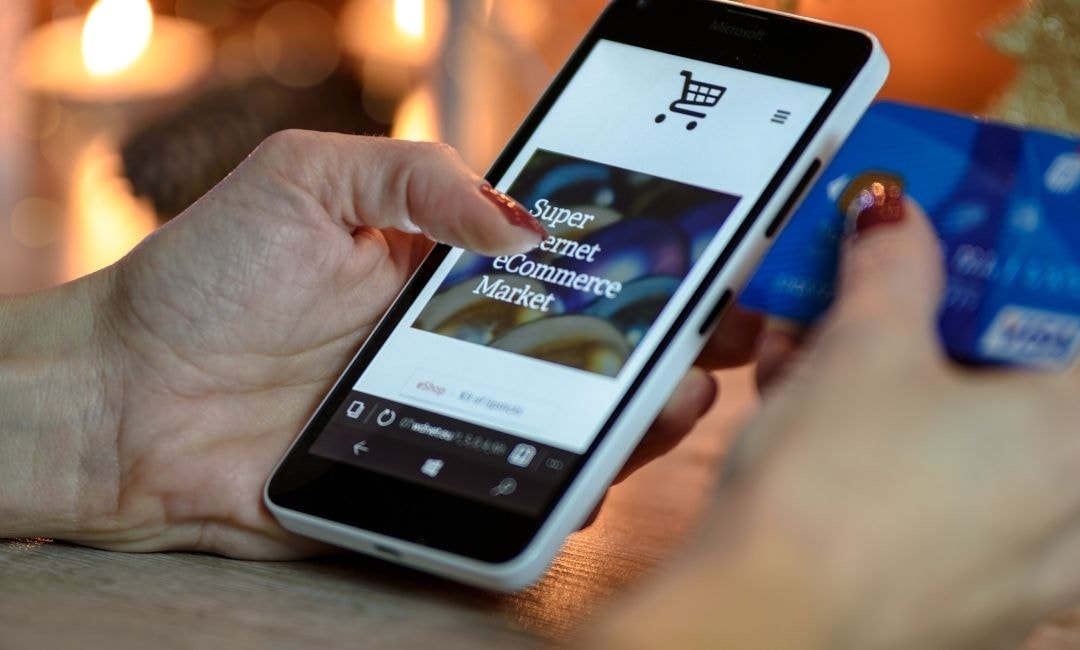
The Agentic Commerce Protocol (ACP) is the backbone that makes Instant Checkout in ChatGPT possible. Without it, AI agents and businesses would have no standardized way to communicate about transactions.
Here’s why it matters:
- Works with existing systems. Merchants don’t need to rebuild their tech stack. Stripe users can enable payments with a single line of code, while businesses using other payment processors can connect through Stripe’s Shared Payment Token API or the Delegated Payments Spec.
- Preserves customer relationships. Merchants remain the merchant of record, with full control over orders, payments, fulfillment, and customer relationships.
- Protects the buyer’s payment credentials. Encrypted payment tokens are only authorized for specific amounts and specific merchants with the user’s permission.
The protocol isn’t locked to one platform either. Stripe is working with early partners such as Microsoft Copilot, Anthropic, Perplexity, Vercel, Lovable, Replit, Bolt, and Manus to expand where agentic payments can happen. With AI agents emerging across industries, ACP positions itself as the economic infrastructure for this new wave of commerce.
Stripe and OpenAI have partnered since 2023, when OpenAI began using Stripe Billing and Stripe Checkout for ChatGPT Plus subscriptions. This latest move to launch Instant Checkout builds on that foundation and lets AI platforms build shopping experiences directly into conversations.
The Customer Checkout Experience Explained
For shoppers, the experience is dead simple. You go from question to confirmed order in just a few taps.
Here’s the step-by-step breakdown:
| Step | What Happens |
|---|---|
| 1. The Prompt | You ask ChatGPT a shopping question. Something like “best gifts for a plant lover under $50” or “durable carry-on luggage.” |
| 2. The Recommendation | ChatGPT surfaces relevant products from participating merchants. Results are organic and unsponsored, ranked by relevance. |
| 3. The Buy Button | Products eligible for Instant Checkout in ChatGPT display a “Buy” option. One tap starts the process. |
| 4. The Checkout | A Stripe-powered checkout form appears inside the chat. You confirm shipping, payment method, and order details without leaving the window. |
| 5. The Confirmation | The order routes to the merchant’s backend for fulfillment. You get a confirmation, and the merchant handles everything from there. |
Customers can pay with a credit card, Apple Pay, Google Pay, or Link by Stripe. For Plus and Pro users, ChatGPT can prefill payment details and shipping info to speed things up. Free users still get the full checkout experience, just without the prefilled convenience.
Only the information required to complete the order is shared with the merchant, with the user’s permission. Your data stays protected, and you explicitly approve each step before anything happens.
Pro Tip: If you’re a merchant, the new AI powered experiences mirror what happens on your own site. You accept or decline the order, process payment, and handle fulfillment all on your existing systems as the merchant of record.
Opportunities and Drawbacks for E-Commerce Brands
Instant Checkout in ChatGPT isn’t just a shiny new feature. It’s a strategic decision. And like any decision, it comes with trade-offs worth weighing carefully.
The Opportunity: Access to a Massive Audience
The numbers speak for themselves. ChatGPT reached 700 million weekly active users in August 2025, up from 500 million in March, marking a 4x year-over-year increase.
That’s not a niche audience. That’s a market.
For brands willing to participate, Instant Checkout offers:
- Discovery at the point of intent. People asking ChatGPT for product recommendations are already in buying mode. You’re meeting them at the moment that matters.
- A level playing field (for now). Product results are organic and unsponsored, ranked purely on relevance to the user. Smaller brands with quality products can compete without massive ad budgets.
- Seamless integration. If you already process payments with Stripe, you can enable agentic payments with minimal effort. Even merchants using existing payment providers can participate through the Delegated Payments Spec.
Stripe built Shared Payment Tokens (SPT), a new payment primitive for AI commerce that lets many AI agents facilitate purchases securely. As more platforms adopt ACP, your products could surface across multiple AI assistants, not just ChatGPT.
The Downside: You’re Not in the Driver’s Seat
Here’s where it gets tricky. When you sell through a third-party AI, you hand over control of the customer experience.
The “Black Box” Problem
ChatGPT’s recommendation algorithm isn’t transparent. You don’t know why your product gets surfaced or buried. There’s no dashboard showing you what’s working. You can’t A/B test your listings or optimize for visibility the way you would with traditional SEO or paid ads.
Brand Dilution
Inside ChatGPT, your product is just another item in a list. No custom photography. No brand storytelling. No carefully designed product page. The unique experience you’ve built on your own site? Gone. Replaced by a standardized chat interface.
Limited Customer Interaction
The AI handles the entire pre-purchase conversation. It’s trained to be helpful, but it’s not trained on your brand’s values, tone, or product expertise. You miss the chance to:
- Build rapport before the sale
- Answer nuanced product questions
- Capture emails for future marketing
- Turn one-time buyers into loyal customers
Instant Checkout does not allow merchants to sign customers up for marketing emails from orders placed through ChatGPT. That’s a significant limitation if your business model depends on repeat purchases and customer lifetime value.
The Bottom Line?
Instant Checkout in ChatGPT can expand merchants’ reach dramatically. But it’s not a replacement for owning your customer experience. The smartest brands will treat it as one channel in a broader strategy, not the whole playbook.
And if visibility in AI-powered search is becoming a priority, the question isn’t just “should we enable Instant Checkout?” It’s “Are we showing up when AI tools recommend products in our category at all?”
That’s where LLM SEO comes in. At Doc Digital SEM, we help businesses get discovered in AI-generated answers across ChatGPT, Perplexity, and Google SGE. If you’re serious about conversational commerce, your discoverability strategy needs to start before the checkout button ever appears.
Why Dedicated AI Chatbots Might Be Smarter Than Relying on ChatGPT
Instant Checkout in ChatGPT is impressive. But here’s the thing: ChatGPT simply acts as a middleman. It connects buyers to merchants. It doesn’t represent your brand.
For businesses that rely on customer relationships, repeat purchases, and brand loyalty, that’s a problem.
The Case for Owning Your AI Experience
When you deploy a dedicated AI chatbot on your own site, you make the rules. You control what it knows, how it speaks, and what actions it can take.
Here’s how the two approaches stack up:
| Factor | ChatGPT Instant Checkout | Dedicated AI Chatbot |
|---|---|---|
| Brand Voice | Generic, standardized | Fully customizable to your tone |
| Product Knowledge | Surface-level, pulled from feeds | Deep expertise trained on your catalog |
| Customer Data | Limited, no email capture | Full ownership of leads and data |
| Conversation Control | Handled by OpenAI’s AI | Handled by your trained AI |
| Human Handoff | None | Seamless escalation to support teams |
| Backend Systems Integration | Limited to checkout | Connect CRM, helpdesk, inventory, and more |
A general-purpose AI knows a little about everything. Your own bot becomes a specialist. It can answer questions like “What’s the difference between your two best running shoes for flat feet?” with the kind of detail ChatGPT simply can’t match.
What You Gain by Going Direct
- Complete control over information. You decide exactly what your AI knows. Train it on your product catalog, FAQ pages, return policies, and past support tickets. Every answer reflects your expertise, not a generalized web scrape.
- Consistent brand personality. Is your brand witty and casual? Professional and precise? With a dedicated chatbot, you shape the tone. That consistency builds trust across every customer touchpoint.
- Smooth human handoffs. When a question gets too complex, your AI can pass the conversation to a live agent without losing context. The customer stays in the same chat window. Your team sees the full history. No friction.
- Actionable integrations. Beyond answering questions, dedicated bots can check inventory, look up order status, process returns, or route complex issues to the right department. They plug into your backend systems and actually do things.
When ChatGPT Makes Sense (And When It Doesn’t)
ChatGPT’s strength is reach. With over a million merchants joining through Shopify alone, it’s a discovery channel you can’t ignore.
But if your business depends on:
- Building long-term customer relationships
- Capturing emails for remarketing
- Delivering a branded, differentiated experience
- Handling complex pre-sale questions
…then relying solely on ChatGPT is a gamble. You’re outsourcing the most important part of your funnel to an AI you don’t control.
The smarter play? Use both. Let Instant Checkout in ChatGPT expand your reach. But own the experience on your own turf with a dedicated AI that represents your brand, not just your SKUs.
Pricing Breakdowns: Instant Checkout vs. Alternatives
Let’s talk money. Because no matter how slick the technology is, the economics have to work.
How Instant Checkout Pricing Works
While merchants are charged a fee for each finalized sale, the feature is free for users and has no impact on the price of products.
Here’s what we know about the fee structure:
- Discovery is free. Getting your products surfaced in ChatGPT recommendations costs nothing upfront.
- You pay a small fee on completed purchases. Stripe and OpenAI take a cut when a transaction actually happens.
- Refunds cancel the fee. You only pay when a purchase is made, and it’s refunded if you have a return.
The exact percentage hasn’t been publicly disclosed, but the model follows a familiar pattern: free to play, pay when you win.
Current Limitations to Consider:
Initially, the service only supports single-item purchases. Future updates are planned to include shopping carts for buying several items at once. If your average order value depends on multi-item carts, that’s a temporary bottleneck.
What You’re Really Paying For
The transaction fee is just the surface cost. The hidden costs are harder to quantify:
| Cost Type | Instant Checkout | Dedicated Chatbot |
|---|---|---|
| Transaction Fee | Small fee per sale | None (beyond platform subscription) |
| Customer Data | Limited access | Full ownership |
| Email Capture | Not allowed | Standard feature |
| Brand Control | Minimal | Complete |
| Algorithm Dependency | High (black box) | None |
| Integration Maintenance | Handled by Stripe/OpenAI | You maintain integrations |
For brands where customer lifetime value matters more than single transactions, the math shifts. Losing the ability to capture emails and build relationships has a compounding cost over time.
Dedicated Chatbot Pricing (General Benchmarks)
Dedicated AI chatbot platforms vary widely in pricing, but most follow one of these models:
- Per-conversation pricing. You pay based on how many chats your bot handles. Good for lower-volume sites.
- Monthly subscription. Flat fee based on features, integrations, and usage tiers. Predictable budgeting.
- Hybrid models. Base subscription plus usage fees above certain thresholds.
Most platforms offer transparent pricing dashboards so you can track costs in real time. Compare that to Instant Checkout, where you’re trusting an algorithm you can’t see to surface your products to the right user asks.
The Real Question: What’s Your Strategy?
If you’re a small brand looking for exposure, Instant Checkout’s pay-per-sale model is low risk. You’re not paying to maybe get discovered. You’re paying when someone actually buys.
But if you’re building a brand with staying power, the economics favor owning your AI experience. You pay for the platform, but you keep the customer.
The new era of AI-powered experiences isn’t about choosing one path. It’s about understanding what each channel costs, what it delivers, and where it fits in your funnel.
Want AI Search Visibility? Doc Digital SEM Has You Covered
Stripe payments in ChatGPT mark a turning point for e-commerce. Conversational commerce is no longer a concept. It’s here, and the brands that show up in AI-generated recommendations will capture sales that others never even see coming.
Key Takeaways:
- Instant Checkout in ChatGPT lets users buy products without leaving the conversation, powered by Stripe and the Agentic Commerce Protocol
- The feature launched with Etsy sellers and will soon expand to over a million Shopify merchants
- Shared Payment Tokens keep buyer payment credentials secure while enabling seamless transactions
- Merchants retain full control of fulfillment, returns, and customer relationships
- The trade-off: you gain massive reach but lose control over brand experience and customer data capture
- Dedicated AI chatbots offer an alternative for brands prioritizing long-term customer relationships
- Pricing is pay-per-sale for Instant Checkout, with no upfront costs, but limited email marketing capabilities
If your products aren’t surfacing when AI tools answer shopping questions, you’re invisible to a growing segment of buyers. Doc Digital SEM specializes in LLM SEO, helping businesses rank in ChatGPT, Perplexity, and Google SGE so you’re part of the conversation before the checkout button ever appears.
FAQs
Does ChatGPT use Stripe?
Yes. Stripe and OpenAI co-developed the Agentic Commerce Protocol to power Instant Checkout in ChatGPT. Stripe, the San Francisco-based programmable financial services company, is helping OpenAI launch this new commerce experience. When a user makes a purchase, ChatGPT sends the necessary details to the merchant, and Stripe handles payment processing, fraud checks, and token security in the background.
What is the payment wallet for ChatGPT?
ChatGPT doesn’t have a dedicated wallet. Instead, it uses Stripe’s Link payment system along with standard options like credit cards, Apple Pay, and Google Pay. For Plus and Pro users, ChatGPT can save and prefill payment details to speed up future purchases. Data sharing is minimal, with only the information required to complete the order passed to merchants.
What are the disadvantages of using Stripe?
For Instant Checkout specifically, the main drawbacks include:
–Limited transparency. You can’t see why ChatGPT recommends (or doesn’t recommend) your products
–No email capture. You can’t sign customers up for marketing from ChatGPT orders
–Single item purchases only. Multi-item carts aren’t supported yet
–Dependency on the algorithm. Your visibility depends on a system you can’t directly influence
Merchants using an existing provider can still participate through Stripe’s Shared Payment Token API, but they’ll face the same limitations around brand control and customer data.
How do I use Instant Checkout on ChatGPT?
Simple. Just ask ChatGPT a shopping question like “best running shoes under $150” or “gift ideas for someone who loves cooking.” When eligible products appear, tap the “Buy” button. A Stripe-powered checkout form opens inside the chat.
Confirm your shipping and payment info, and you’re done. The order goes to the merchant for fulfillment. The whole process reaches hundreds of millions of users and works across various business types, from cosmetics firm Glossier to small Etsy sellers. Merchants can enable agentic payments with as little as one line of code if they already use Stripe.


